
Lorenzo Thione: Gaingels
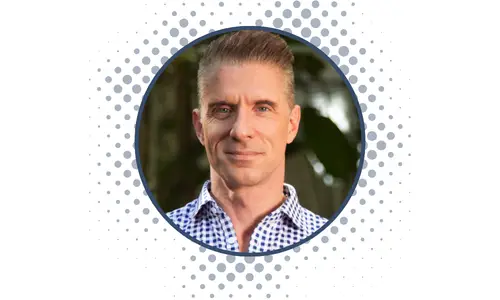
In our Meet a VC series, we sit down with NVCA members to share the people, perspectives, and convictions behind the venture capital industry. This spotlight features Lorenzo Thione of Gaingels, an AI-founder-turned-investor and longtime advocate who has spent two decades inside the venture industry. As General Partner of one of the country’s most active investment syndicates, he is helping build a venture ecosystem where capital, governance, and talent are more representative of the founders and communities they serve. His thesis is deceptively simple: a more open venture ecosystem is a more valuable one.
A Career Built Across the Venture Stack
Lorenzo Thione has spent more than two decades inside the venture industry, first as an operator, then as an advocate, and now as one of the most active investors in the country. His own framing of that arc is straightforward: “I started out as an operator.”
That operator chapter began as a research scientist in artificial intelligence, “many, many years ago, before AI was cool again,” as he puts it. It led to his work as the technical co-founder of Powerset, a natural-language search startup acquired by Microsoft in 2008. Powerset’s technology was woven into the early versions of Bing and helped pull search toward a future, Lorenzo says, that is only now being fully realized: people talking to their computers, asking questions, getting answers. “We were talking about these ideas 25 years ago.”
After the exit, he started learning the view from the other side of the table: angel checks, board seats, a more active role in the ecosystem. The work led him to co-found StartOut, a nonprofit now in its eighteenth year that supports LGBTQ+ entrepreneurs across the country, and then to help build Gaingels. What started as a small LGBTQ+ angel group is now one of the most active venture syndicates in the world, with thousands of investor members backing companies alongside leading VCs. The animating idea was, and remains, simple: build a class of investors and founders that the traditional networks of venture had largely left out.
The Hard Part Isn’t What — It’s When
Lorenzo’s stretch as an AI researcher in the early 2000s gives him a rare vantage point on the current moment. He’s careful, though, to make a distinction many in the field tend to blur.
“Anticipating the future as to whether something is going to happen is much less difficult than one imagines. What’s really hard to see is when.”
He uses Star Trek as a teaching example: communicators became smartphones, PADDs became iPads, voice assistants became real. The technologies were predictable. The timing wasn’t. And in venture, he argues, timing is where value is actually created or lost.
“A lot of what venture capital is, is as much a bet on people as it is a bet on timing. We were right 25 years ago. We were wrong, though, on the timing.”
Powerset, he says, was directionally correct and chronologically early. The data didn’t exist yet (“this was before YouTube even”), compute was too expensive, and the algorithmic breakthroughs hadn’t landed. That gap between intuition and inflection is, in his telling, the thing experienced investors quietly spend their careers learning to feel.
Wearing All Three Hats at Once
Lorenzo has moved between operator, advocate, and investor for nearly two decades, and he doesn’t really see those as sequential roles. Running Gaingels, with thousands of investor members and a deal volume unlike most traditional funds, looks a lot more like operating a startup than sitting at a traditional venture firm. He still thinks in terms of cost of acquisition, burn, and the dials a founder watches every morning.
“The through line is feeling like I can wake up going to work with people I like, doing work that matters to someone, and being creatively and intellectually challenged on an ongoing basis.”
Advocacy has been just as durable. He’s still on the board of StartOut after 18 years. Gaingels was founded around a mission of bringing more voices to the table in venture, and that mission has only crystalized over time. From investors and check-writers from communities around the industry historically overlooked, to founders and C-suite leaders building more representative companies, and board members reshaping how those companies are governed. Even his work in the theater, he says, is a form of advocacy: gravitating to stories that hand audiences a window into a life they don’t know.
“We are stronger, broadly and intellectually, when we are more open to views of the world and life experiences that are not the ones we’ve lived.”
He also notes a quiet gift of the current AI cycle: investors who were operators twenty years ago, but had lost the day-to-day craft of writing code, are suddenly within reach of that builder identity again. “Keeping your mind and your options open is a great thing.”
A Brief Aside: Companies as Productions
Lorenzo is also a Tony Award–winning Broadway producer, currently working on his latest musical, Indigo. While it’s tempting to make that the lede, the more interesting connection runs the other direction. Building a company, he says, is itself a creative act: “effectively creating something that did not exist,” as he puts it, “willing it into existence against all odds.” It’s a framing with deep roots in venture itself. More than thirty years ago, Bill Davidow (Intel veteran and co-founder of Mohr Davidow Ventures) argued in The Virtual Corporation (1992) that the most adaptive companies of the future would operate less like traditional firms and more like creative productions, with a small core assembling specialists and partners around each project. The companies Lorenzo backs today, with cap tables stitched together across syndicates and operators-turned-investors plugging into deals on demand, look a lot like that prediction coming true.
“When you’re raising money, hiring someone, convincing anyone to join forces with you, you want them to believe a certain story and connect at an emotional level. It is an emotional decision.”
A More Open Ecosystem Is a More Valuable Ecosystem
When asked how the venture industry could continue to move toward broader representation; Lorenzo is poised and intentional. Gaingels, he says, was built to serve people who already want to act: investors and founders who recognize the goal but don’t always have the network or the playbook to get there.
“We’re less likely to say, ‘You should do this, you should change the way you do business.’ We exist to make it easier for people who already want to.”
His broader case is economic, not ideological. A more open, more accessible, more democratized venture ecosystem creates more value, he argues, because the wealth that gets created flows into more communities. That funds more entrepreneurs, surfaces more ideas, and ultimately serves audiences and markets the industry has historically built around rather than for.
“If I could make a wish, I would love for any VC or fund that doesn’t know us to come learn about us, ask around about the experience of working with Gaingels, and make room for us in their next rounds. We’re not quotas or hard constraints. We just want to help the ecosystem work better.”
That conviction shows up concretely in how Gaingels works with the founders it backs. The firm doesn’t just write checks; it helps portfolio companies think about the composition of their leadership, the diversity of their cap tables, and the talent pipelines feeding both.
“We exist to help founders build the most representative and inclusive companies they can, at the levels of governance, capital, and talent.”
Why He’s Optimistic
Lorenzo’s optimism is rooted in the same thing, he says, that has kept every generation of VC at the table: the people who keep showing up to build.
“This world of high-growth, high-risk, entrepreneurial endeavor attracts the most interesting, brilliant, motivated, high-agency people in the world.”
He pushes back on the cliché that founders are all 19- and 23-year-olds. The reality, he says, is that experienced, serial entrepreneurs are now building companies that are 10, 100, sometimes 1,000 times more capital-efficient than they could have been a few years ago. And as the funnel into venture widens, with more communities of investors getting access and more founders seeing themselves represented at the cap table, many of those founders in time become the investors of tomorrow.
“It’s a little bit of a circle of life. It’s a great renewal cycle: people who take a bet, and then go on to take a bet on the next generation of entrepreneurs.”
That cycle, in Lorenzo’s telling, is a familiar flywheel in venture capital: operator to advocate to investor and back again, capital and conviction flowing into new communities, stories told well enough to convince other people to join.