
Jenny Rooke: Genoa Ventures
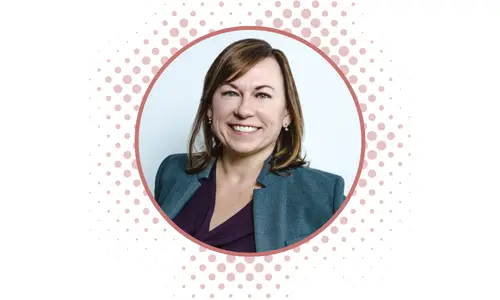
In our Meet a VC series, we sit down with NVCA members to share the people, perspectives, and convictions behind the venture capital industry. This spotlight features Jenny Rooke of Genoa Ventures, an early-stage venture firm investing at the intersection of biology and technology, with a thesis spanning biotech, agtech, and industrial bio — a space Jenny describes through the lens of bioconvergence.
For Jenny, biology is not only a healthcare discipline. It is a general-purpose technology with the potential to shape industries, strengthen national competitiveness, advance agriculture, improve human health, and unlock entirely new markets. Genoa Ventures is built around that belief: that the next era of innovation will come from founders who can bring biology, engineering, software, data, chemistry, manufacturing, and other disciplines together in new ways.
Startups as the Engine of Innovative Disruption
Jenny’s path to venture began with science. She earned a BS in physics from Georgia Institute of Technology and a PhD in genetics from Yale University before moving from the lab into the business world. At McKinsey, where she advised pharmaceutical and biotechnology companies on strategy and growth, she saw firsthand how established industry leaders respond to technological change.
It was the early 2000s, shortly after the Human Genome Project had produced the first draft of the human genome. To Jenny, it was clear that biotechnology would define the century ahead. But many of the large companies she worked with were not asking how to create the disruption. They were asking how to manage it.
That distinction changed her trajectory.
“I was very excited about how that was going to transform industries,” Jenny said. “And I found that our clients at McKinsey were, understandably now in retrospect, a little less interested in disruption. They were often more asking, how do we navigate the coming disruption, versus how do we drive it?”
That realization pulled her toward startups. She joined a small Boston-area company working on new tools for genomic analysis and fell in love with what she calls the “zero to 100 journey”: a small group of people, deeply committed to solving a problem with science and technology, moving quickly together with focus and conviction.
Venture capital entered the picture as a way to understand how those companies are built. Jenny saw early-stage investing as a case-study-based education in launching and scaling science-based companies. The more she learned, the more she came to believe that startups are one of the most powerful mechanisms for translating innovation into new products, new businesses, and new markets.
“I was drawn to venture because of my deep belief in startups as an unparalleled mechanism for driving innovation and value creation,” she said, “and my desire to learn how to build them through a venture capital experience.”
Biology as a General-Purpose Technology
Jenny’s approach to biology has always been shaped by her training across disciplines. Coming to genetics from physics and software engineering gave her a different lens: biology was not only a field of study, but a technology platform for making products and solving problems.
That view was reinforced by the frustrations of scientific discovery itself. Early in her lab career, Jenny designed a PCR experiment that did not work. When her principal investigator told her that sometimes those reactions simply fail and no one knows why, she was humbled and appalled. The gap between what scientists can theorize and what biology actually does is, to Jenny, both daunting and exciting. It is also the reason Genoa’s thesis starts with better tools and deeper biological insight.
“The history of biology and biotechnology is one of advances via better technologies to understand it, to engineer it,” Jenny said. “It’s essentially the story of the better microscope.”
Every improvement in optics, chemistry, data analysis, measurement, and instrumentation expands what researchers can see and build. That matters in medicine, but it also matters far beyond it. Genoa invests across synthetic biology, computational biology, AI, diagnostics, research tools, genomics, bio-manufacturing, food and agtech, industrial bio and chemicals — multi-trillion dollar verticals where biology can become a platform for solving problems across the economy.
The firm’s thesis also challenges a common limitation in modern life sciences: measuring what is easiest to detect rather than what is most biologically meaningful. Jenny’s view is that better outcomes depend on going back to the basics — generating richer, more precise molecular, physiological, and multimodal data that reflects the full complexity of human biology.
In an era of artificial intelligence, that point becomes even more important. Biotechnology may be one of the most important interfaces where AI meets the physical world, but AI-driven advances in healthcare and life sciences will depend on access to high-quality biological and clinical data. For Jenny, the future of precision medicine begins with more informed medicine.
Investing Between Categories
Genoa Ventures was created to support founders building in a space that many investors had not yet learned how to categorize.
After roles at F-Prime Capital (fka Fidelity Biosciences), the Bill & Melinda Gates Foundation, and Anterra Capital, Jenny saw the same pattern repeatedly: the impact of the next wave of engineered biology was not confined to healthcare. It was showing up in food and agriculture, industrial chemicals and materials, national security and defense, even consumer and other markets where biology and technology were converging.
But the capital markets had not fully caught up.
“What I found was the venture capital landscape had not caught up to the enormous opportunity that sits between categories,” Jenny said. “Is it life sciences? Yes. Is it tech? Yes. Where do we put it? We don’t know.”
That gap created a hurdle for founders. Companies working between traditional biotech and software categories needed investors who were technically and scientifically fluent, but also institutionally rigorous and prepared to help them build venture-scale businesses.
Genoa was built for that gap.
The firm looks for founders with unusual insight into a market or customer need — whether that need is a better tool for an R&D scientist, improved crops, or a diagnostic test in the hands of a clinician. Jenny is especially drawn to teams whose own backgrounds mirror the bioconvergence thesis: people who can translate between worlds that do not always speak the same language.
She describes some of these teams as “chimeric.” A founder might combine electrical engineering and medicine. A team might bring together deep customer knowledge, operating experience, and cutting-edge genetic engineering. In the best cases, those combinations create insight that is difficult for others to replicate.
That is where Genoa sees the opportunity for venture-scale outcomes. When science, technology, market timing, and founder insight come together, the result can be a company that radically advances what is possible and builds a durable moat around it.
Venture as the Sail
The name Genoa reflects how Jenny thinks about venture’s role in partnering with startups.
A genoa is a large sail. It is not the captain. It is not the boat. It is not the tiller. But when used skillfully, it provides power.
Jenny sees founders as the brave explorers charting a new course — the people willing to take on extraordinary risk to build toward a destination that may not yet be visible. The company is the vessel. The founders are the captains. Venture capital, at its best, helps them move faster and more skillfully.
“As VCs, we do provide power,” Jenny said. “And that is what the sails do.”
The metaphor also keeps venture in perspective. Venture capital is not right for every company, and Jenny is quick to say that most extraordinary businesses are built without it. She also points out that even when venture capital has a role to play, other forms of capital, such as non-dilutive capital in the form of government funding can be critical and complementary. But in special situations — where the right crew, the right vessel, and the right destination come together — venture capital can provide the lift, resources, reserves, networks, and long-term partnership that founders need, in ways that no other partner can.
That belief brought Jenny back to venture after seeing the limitations of writing individual checks. Founders in this category needed more than capital. They needed partners with institutional resilience, scientific fluency, follow-on capacity, and a team capable of helping them navigate a new market.
For Jenny, that is what venture capital remains uniquely positioned to do.
Building the Future Biology Makes Possible
Jenny is clear-eyed about the challenges facing venture. The past few years have been difficult for venture-backed startups and venture firms alike. Capital has been tighter, risk appetite has shifted, and both founders and fund managers have had to return to fundamentals.
But the fundamentals are exactly what keep her optimistic.
“Do I think we are in a century-long arc of transformation of human experience through the power of understanding and engineering biology? I absolutely do,” she said. “Do I think that there’s a series of seven-to-10-year leaps that need to happen in the context of startups which need venture capital? Absolutely.”
That conviction has important implications beyond the venture industry. If biology is a general-purpose technology, then the companies being built today will matter for healthcare, agriculture, AI, national defense, national security, supply chains, and America’s ability to remain a global leader in innovation and markets.
It also means policymakers should avoid putting this technology into a single box. The companies Genoa backs may look like biotech, software, AI, diagnostics, tools, agriculture, or advanced manufacturing — and often, they are more than one of those at once.
That is why Jenny’s story is also a story about the role of venture in the American economy. Venture capital helps founders build before markets are obvious, before categories are settled, and before incumbents are ready to move. In bioconvergence, that work may help determine how the next generation of biology companies is formed, financed, and scaled.
For Jenny, the belief remains unchanged.
“The beliefs are unshakable,” she said. “The fundamentals are there.”
And for the founders brave enough to chart the next course, Genoa is there to provide power.