
Mike Moradi: Cortado Ventures
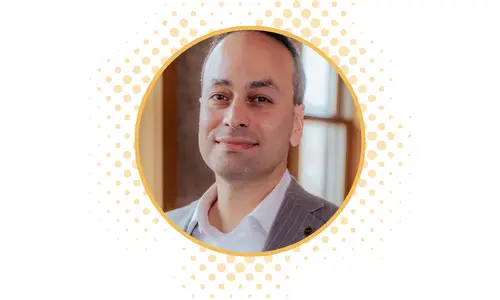
In our Meet a VC series, we sit down with NVCA members to share the people, perspectives, and convictions behind the venture capital industry. This spotlight features Mike Moradi, co-founder and general partner of Cortado Ventures, an Oklahoma City-based firm investing in seed-stage frontier technology companies across the U.S. Midcontinent.
Cortado’s thesis is grounded in the belief that the founders best positioned to transform critical industries are often the people who have spent years working inside them. By connecting their experience with capital, customers, and a broader network of support, the firm is helping expand where American innovation can take root.
Built by Founders, for Founders
Moradi came to venture capital after experiencing the uncertainty of company building firsthand.
A six-time founder, he has built and led companies across biopharmaceuticals, nanotechnology, and other technically complex industries. His entrepreneurial journey began when he left dental school to start his first company.
It failed.
The experience did not make him less ambitious. It taught him to keep moving through setbacks and to remain committed when others questioned the path ahead.
“The lesson was to keep pushing past every obstacle, to not be discouraged by hearing the word ‘no,’ and to stay the course.”
His next company grew quickly and was acquired by a Fortune 100 company. A later San Francisco bay area venture was also acquired, but only after nearly failing following an $18 million Series B financing.
That experience delivered a different lesson. Capital can help a company move faster, but speed is only valuable when a business is moving in the right direction and ready to scale.
“A high valuation and a full bank account will happily let you scale the wrong thing.”
Today, Moradi’s mission in life is to bring Silicon Valley’s spark to the Midcontinent. He spends as much time thinking about the sequence and timing of capital as he does about a company’s technology. Financing should help founders test assumptions, reduce risk, and reach meaningful milestones. It should not allow a business to grow ahead of what it has proven.
That experience taught him to pair entrepreneurial optimism with evidence, discipline, and a clear understanding of what the company must prove next.
Moradi helped launch Cortado Ventures in 2020 alongside a team of experienced founders, CEOs, and operators. Together, they set out to build the kind of firm they wished had existed when they were entrepreneurs: one that understood the decisions founders face and could contribute far beyond the initial investment.
The Midcontinent as a Competitive Advantage
The Midcontinent is home to many of the industries facing the greatest pressure to evolve.
Energy, aerospace and defense, healthcare, manufacturing, mobility, and logistics all operate within complex physical environments, established supply chains, and demanding customer relationships. Transforming them requires more than a compelling software application. It requires a deep understanding of how the industry works.
Cortado looks for experienced technical founders who have that understanding.
They may have spent years inside a hospital, factory, laboratory, energy company, aerospace program, or logistics network before recognizing an opportunity to solve a persistent problem differently. Their experience can give them credibility with customers, insight into implementation challenges, and knowledge that would be difficult to develop from outside the industry.
The geography itself can become part of the investment advantage. The region offers proximity to critical industries and potential customers, a technically skilled workforce, strong research institutions, complementary public funding, and lower company-building costs.
Cortado’s portfolio reflects the breadth of innovation emerging from that environment. Its companies are applying new technologies across space communications, industrial safety, critical infrastructure cybersecurity, advanced manufacturing, healthcare, energy, and mobility.
The firm’s strategy is not built on the idea that Midcontinent founders should receive investment simply because they have historically attracted less venture capital. It is built on the conviction that proximity to hard problems can produce differentiated companies and strong returns.
“Talent is not concentrated anywhere in particular. Capital and networks have just been slower to distribute than talent has.”
For Moradi, expanding the geographic reach of venture capital is not only about finding more founders. It is about uncovering sources of insight and innovation that traditional networks may have overlooked.
Capital Is Necessary, but Not Sufficient
When Cortado began, Moradi believed the primary constraint facing a young venture ecosystem was a shortage of capital.
The firm helped demonstrate that promising companies could be identified and funded in the region. But as Cortado grew, Moradi’s view of what founders needed became more expansive.
“Five years ago, I would have said the limiting reagent in a young ecosystem was capital. Capital turned out to be necessary, and also nowhere close to sufficient.”
Founders also need experienced operators who can help them avoid preventable mistakes, customers willing to try an unproven technology, investors prepared to support a company between milestones, and a community where important relationships can form.
“Money can accelerate a company,” Moradi said. “It cannot stand in for experience.”
That realization shaped Cortado’s role in the broader Midcontinent ecosystem. The firm works to connect founders, funders, universities, corporations, policymakers, and technical experts rather than reserving those relationships exclusively for its own portfolio.
Its annual Midcontinent Venture Capital Summit brings together investors, limited partners, founders, and ecosystem leaders from across the country. Cortado also works with regional entrepreneurship organizations and The Verge, an Oklahoma City incubator and accelerator providing company-building resources, programming, and capital connections.
Each interaction can help a founder find a customer, adviser, employee, collaborator, or investor. Collectively, those relationships create the infrastructure that allows more companies to start and scale.
For Moradi, that is where venture capital’s impact begins to extend beyond a single investment. A stronger ecosystem gives more entrepreneurs a viable path to company formation while creating more opportunities for capital, talent, and innovation to reach one another.
Conviction Without False Certainty
Early-stage investors rarely have perfect information.
“Incomplete data is my job description,” Moradi said.
Rather than attempting to eliminate uncertainty, he separates assumptions that can be tested immediately from those that will only be resolved over time. He identifies the conditions that must be true, considers how they could be proven wrong, and evaluates the cost of reaching the next meaningful milestone.
His strongest conviction tends to center on the founding team, the customer problem, and the company’s rate of progress. He is more cautious about predicting the precise timing of an emerging market or the path a company may eventually take to an exit.
That discipline becomes particularly important when a financing round is moving quickly. A compelling founder and a competitive process can create pressure to reach a decision before the central investment assumptions have been tested.
“A hard deadline is exactly when people stop asking uncomfortable questions.”
When necessary, Cortado will slow the process down and bring independent scientific or technical experts into the evaluation. The additional diligence may strengthen the firm’s conviction or reveal a reason to step away.
Cortado’s strongest founder relationships have started with that scrutiny, because it can sharpen thinking and identify risks while there is still time to address them. Slowing the decision does not mean slowing the response, however.
Moradi applies the same discipline to valuation.
“A sensible entry price is a form of protection for the founder, employees, and investors alike.”
An aggressive valuation can feel like an immediate victory. But if the company’s progress does not meet the expectations attached to that number, the consequences can affect founder ownership, employee equity, future fundraising options, and the company’s ability to adapt. This cuts both ways, as VCs can also strangle the life out of a company. Balance is key.
“The right number buys you options for years. In boom times, people forget that financial crises happen,” Moradi said.
For Cortado, discipline is not a lack of belief in the founder’s ambition. It is a way to give an ambitious company the flexibility and time it needs to succeed.
Showing Up With Work Already Done
Cortado’s team has built, scaled, and exited companies across many of the industries in which the firm invests. That operating experience shapes how it supports founders when plans change or difficult decisions emerge.
Moradi describes meaningful support in two words: “Speed and specificity.”
“Answer in hours rather than days and show up with work already done instead of advice. Better yet, pick up the phone.”
That may mean rebuilding a financial model, making a customer introduction, recruiting a senior executive, or taking responsibility for a difficult part of a board conversation. It can also mean saying what others are reluctant to say when a company’s runway is shortening or its strategy needs to change.
Moradi remembers being the founder in those meetings.
“What helped was someone who lowered the temperature, told the truth to me and the board, and followed up after the meeting.”
Cortado’s founder support has become more sophisticated as the firm and the surrounding ecosystem have grown. Portfolio companies can draw upon operating executives, industry specialists, advisers, prospective customers, coaches, investors, and other founders within the firm’s network.
The needs of founders have evolved as well. When capital was scarce in the region, Cortado’s investment and ability to bring additional investors into a round were particularly valuable. Today, founders also need customer access, senior talent, technical expertise, and people willing to offer honest guidance.
The firm’s role is not to take control away from the entrepreneur. Sometimes the most valuable contribution an investor can make is knowing when not to intervene.
“Other times,” Moradi said, “being helpful means staying out of the way.”
Building What Outlasts a Fund
Moradi believes a venture firm’s responsibility extends beyond its own portfolio.
“We must build things that outlast a single fund.”
For Cortado, that means strengthening connections among founders, funders, universities, corporations, and policymakers. It also means helping more investment firms form and grow within the region.
“This is not a zero-sum game,” Moradi said. “We want to enable a dozen other firms in our geography, and bring in outside funds for later rounds. We need to create scalable structures where everyone can win.”
A larger and more connected investment community gives founders more potential sources of capital and expertise. It creates more opportunities for investors to collaborate and participate in promising companies. Over time, it can establish a more durable pathway between regional innovation and national capital markets.
Ecosystem building does not replace a firm’s responsibility to its limited partners. Moradi has served as a trustee and audit committee member for a state retirement system, an experience that reinforced the importance of being direct about investment risk, duration, and potential losses.
“Ecosystem building matters, and it does not excuse any of us from being disciplined fiduciaries first.”
Moradi also sees NVCA as an important part of the connective infrastructure supporting firms and founders across the country.
Capital formation, research commercialization, immigration, government procurement, tax treatment, and securities rules are not abstract policy issues. They influence whether an emerging manager can raise a fund, whether a startup can attract talent, and whether a new technology can reach the customers and institutions that need it.
“NVCA helps each of us make policy concrete and stay on top of the issues that matter in D.C. and beyond,” Moradi said.
Participation in NVCA also gives Cortado an opportunity to bring a Midcontinent perspective into national conversations about innovation, capital formation, and the future of the venture industry.
Expanding the Map of American Innovation
Moradi hopes Cortado’s story can help people see the breadth of American venture capital.
The industry’s largest firms may receive the greatest attention, but much of venture consists of smaller investors writing early checks into specialized industries, technologies, communities, and regions.
“Most of VC looks nothing like the caricature. The bulk of the industry is small firms writing early checks into some niche, be it industrial, geographic, demographic, or otherwise. And a VC firm is also a startup until fund 3 or 4.”
Those firms play an essential role in finding founders before their markets are obvious, connecting specialized knowledge with capital, and helping companies navigate the difficult period between a promising idea and a sustainable business.
“The hardest work happens after the money moves,” Moradi said.
New technologies are making that work even more consequential. Artificial intelligence, automation, advanced manufacturing, energy innovation, biology, and space technology are reducing the cost of attempting ambitious ideas. Small teams can now pursue opportunities that once required the resources of a large corporation or national program.
Many of those teams will emerge in places closely connected to the problems they are working to solve.
That is the broader impact of expanding venture capital across America. When investors look beyond familiar networks and meet founders where critical industries operate, they help more ideas become companies, more technologies reach the market, and more communities participate in the country’s innovation economy.
For Moradi, the founders attempting what others consider impossible remain the greatest reason for optimism.
“Never forget that we’re here for them. When we do this right, everyone, including humanity, wins.”
We are proud to have Cortado Ventures as part of the NVCA membership. To learn more about the firm, visit cortado.ventures.