
Samara Hernandez: Chingona Ventures
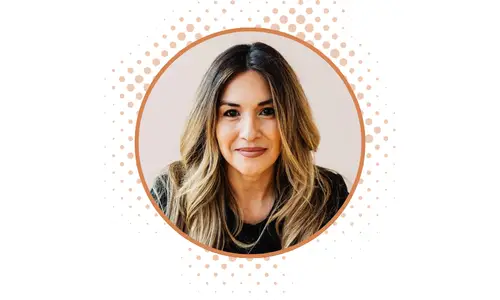
In our Meet a VC series, we sit down with NVCA members to share the people, perspectives, and convictions behind the venture capital industry. This spotlight features Samara Mejía Hernández, founding partner of Chingona Ventures and a member of NVCA’s Board of Directors.
From Chicago, Hernández invests at the pre-seed and seed stages in founders and markets that are often overlooked by traditional venture networks. Her work is grounded in a powerful conviction: transformative ideas can come from anywhere, and the people closest to a problem are often best positioned to solve it.
The Power of Being the First Yes
Hernández began her career at Goldman Sachs, working across fixed income, asset management, and business strategy. When she left to attend the Northwestern University Kellogg School of Management, she knew she wanted to remain in finance but was uncertain what direction her career would take.
A venture capital course—and an internship with a local investor—changed her trajectory.
“I absolutely fell in love with the ambiguity of it,” Hernández said. “You invest in these wild things—brand-new products, brand-new industries, brand-new markets. You get to be a small part of that vision and that future.”
Venture offered Hernández an opportunity to pair the analytical rigor of finance with the imagination required to build something new. It also carried a profound responsibility: helping determine which ideas receive the resources to become real.
“You get to decide what gets funded,” she said. “You get to decide what products get built in the world you want to live in.”
That responsibility is especially meaningful at the pre-seed stage. Hernández often meets founders when a company is little more than an idea. She can be the first investor to validate their vision, the first call when they encounter a problem, and an early partner as they move from concept to customers.
For founders accustomed to hearing no, that initial belief can change everything.
Great Can Come From Anywhere
Hernández founded Chingona Ventures around a principle that shapes both the firm’s investment strategy and its view of the innovation economy: great companies can be built anywhere, by founders from every kind of background.
Being based in the Midwest helps Hernández see problems and opportunities that may be less visible within established coastal networks.
“Being outside of the Valley and outside of these core networks provides a perspective on what 99 percent of the population is facing,” she said. “You get to be outside of this bubble, and you get to see these real problems.”
Those problems include disparities in healthcare access, gaps in educational and workforce mobility, food deserts, and barriers to financial opportunity. Technology can help address them—but only if investors are willing to look beyond familiar geographies, networks, and founder profiles.
Chingona Ventures invests across financial technology, the future of work, the future of learning, and health technology. Rather than defining opportunity according to a conventional profile, the firm looks for industries undergoing significant change and founders whose experiences give them an uncommon understanding of the market.
Hernández described one portfolio founder who immigrated to the United States and attended Loyola University Chicago but temporarily left school because he could not afford to continue. A technical certification helped him obtain better-paying work and eventually complete his degree. The experience showed him the economic power of alternative education and led to a career in the industry.
He later built a company modernizing professional testing and certification—an essential but historically slow-moving market spanning healthcare, food service, graduate admissions, and other industries.
The founder was not a young Silicon Valley dropout. He was a Midwestern operator in his 50s with deep industry expertise and a personal understanding of the problem. Chingona became his first institutional investor, led the round, and continued to support the company as it grew.
“He understood the customer in a unique way,” Hernández said. “The opportunities where we believe we can drive alpha are the ones that are not obvious yet.”
Her approach illustrates how expanding access to venture capital can strengthen investment performance and the broader economy at the same time. When investors widen their field of vision, they can discover founders, markets, and sources of innovation that others have missed.
Finding the Chingona Factor
“Chingona” is a Spanish term Hernández uses to mean “badass woman.” The name reflects the firm’s boldness, but it also informs how the team evaluates entrepreneurs.
Chingona Ventures asks every founder—whether referred through a trusted contact or reaching out cold—to complete the same submission process. That consistent point of entry helps the firm identify talent beyond its immediate network while reducing the influence of warm introductions.
As part of the process, entrepreneurs describe their “Chingona Factor”: an experience that demonstrates their grit, creativity, resilience, or resourcefulness.
For Hernández, those stories provide essential context at the earliest stages, when a company may have limited operating history and little performance data. Chingona still conducts rigorous diligence on the product, business model, customers, and market. But the firm also wants to understand the person responsible for navigating the uncertainty ahead.
“Especially at the early stage, it is really about the human,” Hernández said. “What about you makes us believe that you are going to keep going—that you can fail over and over again and continue to get up?”
A founder’s background is not separate from the investment case. It can reveal why that person recognized an opportunity others missed, how deeply they understand the customer, and whether they can persevere through the inevitable challenges of building a company.
Partnership Beyond Capital
Writing the check is only the beginning of Chingona’s relationship with a founder.
Hernández is deliberate about tailoring that partnership to what each entrepreneur needs. Sometimes the most helpful thing an investor can do is provide capital and give the founder room to execute. When a company needs more active support, she focuses on two areas where her experience can be especially valuable: fundraising and sales.
Chingona helps founders bring additional investors into their rounds, prepare for future financings, develop go-to-market strategies, negotiate contracts, convert pilots, and build early sales teams. That support can be particularly consequential as a company develops its first repeatable systems and grows from an idea into a durable business.
Hernández’s approach to sales is itself instructive.
“People think sales is pitching, but it is actually listening,” she said. “The more you listen, the more you can understand the problem.”
The same principle informs her work as an investor. By listening closely to founders and the communities they serve, Hernández can see both the commercial opportunity and the larger impact a company could create.
Opening Doors for the Next Generation
Hernández did not begin her venture career expecting to launch a fund. She started Chingona after recognizing an opportunity in the market that few investors—particularly in the Midwest—were pursuing.
Building the firm was often isolating. At the time, there were fewer communities and programs designed to help emerging managers navigate fundraising and firm formation. Hernández found guidance through NVCA and Venture Forward, whose educational programs and office hours connected her with experienced members of the venture community.
Those relationships helped turn an ambitious idea into an institution capable of backing other ambitious ideas.
Hernández later served on Venture Forward’s board and joined NVCA’s Board of Directors because she wanted to help extend that opportunity to others. The support that had once helped her could, through a stronger and more connected ecosystem, become a pathway for the next generation of investors.
The most enduring lesson from building Chingona is also the advice Hernández offers founders and emerging managers.
“You are going to get 10 million noes, but you just need one yes,” she said. “I had one anchor LP who believed in me and wrote that first check. After that, other checks came in.”
That first commitment does more than provide capital. It creates momentum, signals credibility, and gives someone the opportunity to demonstrate what others have not yet recognized.
Returns That Reach Beyond a Single Company
What keeps Hernández committed to venture is the work of the founders she supports and the problems their companies are solving.
She points to Teal Health, which developed an at-home cervical cancer screening option that can expand access for women who live far from medical facilities or face other barriers to care. Across Chingona’s portfolio, founders are tackling challenges in health, education, work, and financial access—building businesses with the potential to improve lives while generating competitive returns.
Those returns can ripple through the entire ecosystem. Chingona’s limited partners include traditional institutions as well as public and community-focused organizations. One scholarship organization that helped Hernández afford her own education later became an investor in her fund.
The significance of that moment was not lost on her. A successful investment could help that organization support more students facing the same barriers she once did.
This is the multiplier effect of venture capital: investment in a fund becomes investment in founders; founders build companies, products, and jobs; and successful outcomes return capital to institutions serving retirees, students, taxpayers, and communities.
“I get to help these incredible founders who are told no every single day, who may not come from traditional communities but are obsessed with a problem that needs to be solved,” Hernández said. “You get to be their first yes. You get to believe in them before everybody else.”
Hernández’s story reflects the breadth of American venture capital: a Latina investor in Chicago building an institution, opening doors for other investors, and backing founders whose ideas could transform industries and communities.
For Hernández, the privilege of venture is not simply seeing the future before it arrives. It is helping more people believe they have a place in building it.