
Bedy Yang: 500 Global
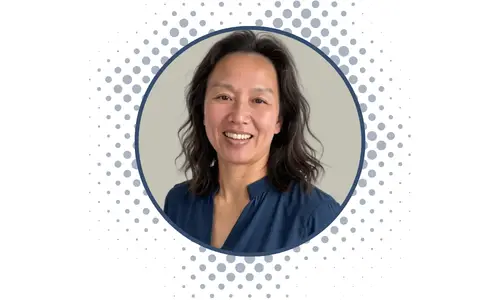
In our Meet a VC series, we sit down with NVCA members to share the people, perspectives, and convictions behind the venture capital industry. This spotlight features Bedy Yang, managing partner of 500 Global, whose experience across markets offers a powerful view of venture capital as more than a source of financing.
For Bedy, venture capital’s impact extends beyond financial support. When capital, knowledge, community, and the broader innovation ecosystem work together, they can accelerate founders and expand where innovation takes root.
Seeing Venture Through a Global Lens
Bedy entered venture capital 15 years ago with a perspective that was still relatively uncommon in the industry. Chinese Brazilian and based in the Bay Area, she saw an opportunity to connect entrepreneurs with the capital and networks they needed to build transformative businesses.
At the time, venture capital remained heavily concentrated in Silicon Valley, even as promising companies were beginning to emerge in markets such as China and India. Bedy’s international background helped her recognize that entrepreneurial talent was much more widely distributed than the infrastructure supporting it.
“What brought me into venture was the ability to unlock capital and networks for entrepreneurs,” she says. “They are the ones building transformative businesses.”
Her experience also taught her that the surrounding ecosystem can be just as important as the investment itself. In established innovation hubs, universities produce talent and research, investors provide capital, corporations become customers and acquirers, and public policy supports company formation, hiring, growth, and exits.
Outside those hubs, the absence of any one component can make an already difficult entrepreneurial journey even harder. That is why Bedy believes investors must look beyond individual transactions and consider the broader environment founders need to succeed.
“You need to create momentum and acceleration with all the stakeholders into the conversation,” she says. “We need to create momentum for founders to be successful and when returns hit, it is wildly successful because you can invest in really good companies at a lower valuation too”
Accelerating Founders Waiting to be Ripe
At the earliest stages of a company, there may be little operating history, limited data, and no established playbook. The investment decision often begins with the founding team.
Bedy looks for two qualities in particular: a deep commitment to the problem and the capacity to learn and execute.
The strongest founders are not waiting for an investor to validate the importance of their work. They are consumed by the problem they are trying to solve and continue building whether or not a particular meeting, introduction, or funding round goes their way.
That conviction must be paired with evidence of movement. Have they spoken with prospective customers? What did they learn? Did those lessons change the product or strategy? Can the team move quickly, absorb new information, and apply it?
“We don’t make founders successful. They are going to be successful,” Bedy says. “We accelerate them by providing the right timing and connectivity. Something that might take a year can sometimes take a month.”
Venture investors do not manufacture a founder’s ambition, insight, or resilience. They help remove friction around it by providing capital to hire and experiment, connections to customers and talent, and knowledge that can shorten the distance between an idea and its real-world impact.
Building the Ecosystem
The work of venture capital increasingly involves helping founders navigate a much broader system.
That can mean giving founders a voice in policy conversations involving immigration, taxes, or capital markets. It can mean introducing prospective corporate customers, connecting companies with future investors, or helping entrepreneurs learn from peers who have already faced similar challenges.
Bedy sees this as an increasingly important source of differentiation for venture firms. As technology makes company building more efficient and gives founders access to more tools, investors must be thoughtful about the value they provide beyond capital.
That is where much of 500 Global’s own work sits. Since 2010, the firm has helped build startup ecosystems alongside governments and national allocators, from the Sanabil Accelerator in Saudi Arabia to its work with GITA and Bank of Georgia and, more recently, the Startup Venture Building initiative under Digital Morocco 2030.
When capital, policy, and company-building expertise align behind local founders, businesses can emerge that might not have existed otherwise. That progress can also draw investor attention to markets that have historically been overlooked.
For Bedy, this is how national transformation begins from the ground up. Financing may be the starting point, but it is not the finish line.
The structure will differ from firm to firm, but the principle remains the same: venture works best when financing is reinforced by relationships, knowledge, and an understanding of the environment in which a company must operate.
That support can be particularly consequential for founders working outside established technology centers. A strong network can help them gain access to expertise, customers, and capital that may not yet exist in their immediate market. It can also connect local innovation to a wider community of investors and partners.
Education as Infrastructure
One of the most important tools for building that environment, Bedy believes, is education.
For founders, accelerator programs can compress access to talent, capital, mentorship, and knowledge into a concentrated period. But the same model cannot simply be exported unchanged from Silicon Valley.
The support founders need in Silicon Valley may differ from what they need in Saudi Arabia or Singapore. Some markets require foundational company-building support. Others have sophisticated local ecosystems but need stronger connections to customers and international markets.
“Acceleration is a compressed way to find talent, capital, knowledge, and mentorship all at once,” Bedy says. “It brings the community together.”
The same logic applies to investors.
Investor education can have an especially broad effect because the knowledge gained by one investor may shape dozens of companies over a career. Better investment practices can support healthier ownership structures, stronger relationships among co-investors, and more durable companies.
500 Global began developing investor education programming, VC Unlocked: Silicon Valley, with Stanford more than a decade ago after repeatedly seeing investment terms that made promising companies difficult to finance. The goal was not simply to train individual investors. It was to help create a more professional and connected investment community in which founders, investors, and markets could all benefit.
“One investor can invest in five companies, ten companies, thirty companies, or a hundred companies,” Bedy says. “They are amplifiers. From an infrastructure perspective, they are the hubs.”
That work has grown to include GPs, family offices, corporations, LPs, foundations, multilateral organizations, and government leaders. Bedy also sees education as a way to bring more perspectives into the investment community and ensure that a broader range of people has a seat at the table.
At a moment when AI is changing company formation, investment strategies, and portfolio construction, she believes continued learning is essential for investors at every level of experience. She points to 500 Global’s programming with Stanford as an opportunity for participants to sharpen their investment theses, reconsider portfolio construction, and update their skills as the industry evolves.
Conviction With Humility
Fifteen years in venture have also changed how Bedy approaches investment decisions.
Experience has made her more proactive when she encounters an exceptional founder, but it has also made her more humble about predicting exactly how a company or market will develop.
Founders frequently find paths investors did not anticipate. They enter highly regulated markets, challenge entrenched incumbents, adapt their business models, and create opportunities that initially appeared too small or too difficult.
“The more you invest, the more you feel like you know less,” Bedy says. “Founders are constantly teaching us and catching us by surprise.”
That combination of conviction and humility is central to venture capital. Investors must develop informed perspectives and make decisions under uncertainty. At the same time, they must remain open to the possibility that an entrepreneur sees something the existing market does not.
Building the Future Together
What keeps Bedy optimistic is the opportunity to work alongside founders solving real problems.
Across industries and geographies, founders often begin with something they believe is broken. It may be a healthcare system that fails to reach enough people, an educational model that is not working, or a service that has never been accessible to a particular community.
“Founders are often working on things that are broken, or that they see as broken,” Bedy says. “They are building the future they want to see.”
Their work can create economic opportunity, generate jobs, and bring people together around shared challenges. Even when founders come from different countries, cultures, or political environments, a common problem can give them a shared mission.
That is the broader story of venture capital. It begins with an investor and a founder, but its impact extends across companies, communities, and entire innovation ecosystems. When the right support reaches the right entrepreneur at the right moment, venture capital can help turn an ambitious idea into a company capable of changing how people live and work.
We’re proud to have 500 Global as part of the NVCA membership. To learn more about 500 Global, visit: https://500.co/. If you want more information about 500 Global’s investor programs visit: https://500.co/venture-education.