
Jared Carmel: Manhattan Venture Partners
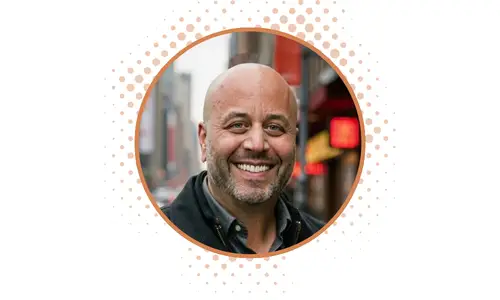
In our Meet a VC series, we sit down with NVCA members to share the people, perspectives, and convictions behind the venture capital industry. This spotlight features Jared Carmel of Manhattan Venture Partners (MVP), a firm that has spent more than a decade building the institutional infrastructure for a shift in the U.S. venture ecosystem: the rise of the secondaries market as a core part of how the industry funds and supports long-lived, high-growth American companies.
Reading the Tape Before Anyone Else Did
Jared Carmel graduated into a difficult job market: the tail end of the dot-com bust, weeks before September 11. The clean lesson, he says, was learning what not to do. The deeper one was understanding that markets move in cycles, and that the patterns repeat. SPACs, telecom infrastructure, clean tech: each came back into fashion years after the industry had written it off.
A turning point came in late 2009. A friend at Facebook was getting married, leaving the company, and wanted to sell some of his shares. Jared bought them at a few dollars apiece. He no longer owns them, and he is the first to laugh about that. But the transaction itself opened a door.
“This was before the secondary markets were even a market. Before people knew it existed.”
From there he began providing liquidity for early employees at companies like Facebook, Twitter, and Palantir, eventually joining what is today G Squared. In 2014, he co-founded Manhattan Venture Partners with a conviction that has since become widely shared across the industry: that the secondaries market needed to be institutionalized, built on the same diligence, discipline, and underwriting standards as any serious primary venture firm.
An Industry Built for Longer Journeys
The American venture industry has spent the last decade quietly evolving to meet a new reality: the companies founders are now building take longer to mature. Some of today’s largest private companies are now in their twenties as private entities.
Jared’s perspective is this is not a sign of distress. It is a sign that founders are building harder things, and that the industry has adapted to support them.
“The IPO window is not closed because the markets are bad. The markets are great. It is closed because companies don’t need to go public to keep building.”
What has emerged in its place is a more sophisticated, more flexible capital stack: one in which secondary markets, growth equity, and a diverse base of late-stage investors can together provide the kind of patient, long-horizon capital that twenty-year journeys require. Secondary capital inside IPOs themselves has grown, a quiet indicator of how much the public listing event itself has evolved.
Why Secondaries Matter to the Innovation Economy
For a long time, secondaries were viewed as a niche corner of venture. Jared was among the earliest to argue that they would become something much more central to the industry’s ability to support American innovation. That conviction has aged well.
“Secondaries are not just supporting the venture ecosystem. They are becoming a key pillar of venture ecosystem.”
The reason is straightforward: when a company is genuinely building for the long term, every additional year of private runway is another year of compounding capability. A robust secondary market gives that company time. Early employees and early investors can realize liquidity without forcing the company into a public offering before its business is ready. Cap tables stay healthy. New long-horizon investors can bring fresh conviction at the moment a company most needs reinforcement. And founders can keep building toward the kind of category-defining outcomes the U.S. venture industry has long supported.
Supporting the Companies America Needs
The deeper question, for any audience trying to understand the venture industry, is what these long-horizon companies are actually building. Jared’s answer focuses on the critical sectors MVP primarily invests in: artificial intelligence, defense, space, supply chain, and frontier compute. The same dynamics apply across many other sectors as well. These are not three-year companies. They are not even ten-year companies. They are twenty-year journeys, and many of them carry real implications for national security and economic competitiveness.
“The companies are going to need to build longer because they have more to build.”
Jared traces his own conviction on this back to the COVID supply-chain shock, when the United States couldn’t reliably source medications or N95 masks. It crystallized something he had been watching for years: that the country had quietly outsourced strategic capabilities it could not afford to be without. The companies now being built to rebuild that capacity share a common profile. They require deep capital, technical talent, and a willingness to plan in decades rather than quarters.
That last requirement is the one the venture industry has had to grow into. Showing up for these founders is no longer just a matter of writing the check; it is a matter of staying alongside them across long stretches of difficult work.
“Being helpful isn’t pushing a transaction. It’s being the person the founder calls before they decide whether they need one.”
For Jared, that means board introductions with depth in critical sectors like defense and national security, operating leaders who can help a growing company scale, and a willingness to stay invested through the long middle of a company’s journey, when the work is hardest and the validation is furthest away.
Why He’s Optimistic
Ask Jared what keeps him in the work, and the first answer is personal: he still finds it remarkable that he gets to spend his career going deep on a dozen companies a year, learning from the people building them. The second answer is about the country.
“Technology is being built by more people than at any other moment in my career. Our job is to keep capital flowing in a way that matches that reality.”
That is the case for the U.S. venture industry, made by someone who has watched it cycle through several booms and resets. The companies American founders are building today are often longer-horizon and more capital-intensive than those of a generation ago, and the industry has adapted to support them. Keeping capital flowing to those companies through every stage of their journey is the work.
We’re proud to have Manhattan Venture Partners as part of our membership. To learn more about MVP visit the website: www.mvp.vc.