
Peter Micca: Caduceus Capital Partners
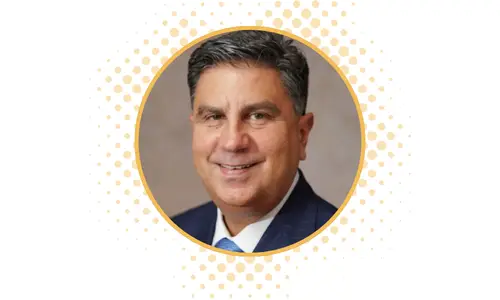
In our Meet a VC series, we sit down with NVCA members to share the people, perspectives, and convictions behind the venture capital industry. This spotlight features Peter Micca of Caduceus Capital Partners, an early-stage digital health venture firm focused on helping transformative healthcare companies move from promising ideas to scalable, market-ready solutions.
For Peter, venture capital is not simply about funding innovation. It is about helping innovation survive contact with the real world — with clinicians, patients, payers, providers, reimbursement models, workflows, channel partners, and the hard economics of healthcare.
Finding Healthcare’s White Space
Peter’s path to venture runs through more than three decades in healthcare, life sciences, technology, finance, corporate finance, and M&A. At Deloitte, he worked across the healthcare ecosystem: payers, providers, pharmaceutical companies, research organizations, strategic investors, private equity firms, and venture-backed innovators.
That breadth shaped his view of healthcare as an interconnected system, where every stakeholder has different incentives and every new technology has to navigate more than one buyer, user, or decision-maker. More than a decade ago, he saw that system shifting as consumerism, consolidation, convergence with other sectors, cost pressure, and compliance reshaped the market.
The most interesting opportunities, he believed, were emerging outside traditional categories — not hospitals, health plans, or pharmaceutical companies, but software, SaaS, AI, robotics, sensing, and other technology-enabled businesses moving healthcare closer to the consumer.
“Instead of trying to build new services, I tried to build a new market. The new market was the white space of the industry.”
That white space eventually led him to Caduceus and to venture capital as a way to help founders build what the healthcare system will need next.
Built for Adoption
Caduceus invests in health innovation with a focus on technologies that can expand access, reduce costs, and bring care closer to where people live. Peter’s macro thesis is rooted in a hard reality: healthcare costs cannot continue rising indefinitely. He argues that rationing care is not a realistic answer in the United States, which leaves technology as one of the most compelling ways to improve access, productivity, and outcomes.
“Technology will help engage the consumer, bend the cost curve, allow for new access points, and create better outcomes at a lower cost.”
That thesis shows up in Peter’s focus on areas where need is acute and impact can be significant, including women’s health, pediatrics, and rural health. In pediatrics, he sees an opportunity to invest earlier in the life cycle. In rural health, he sees technology as a way to strengthen care delivery in communities where traditional brick-and-mortar models are under pressure.
But Peter is equally clear that healthcare innovation has to be practical. A product can be technically impressive and still fail if it adds friction to an already burdened clinician, operator, or care team.
“If a technology is going to add a layer to an existing workflow, it almost doesn’t matter how good it is. They won’t use it.”
That is why Caduceus brings healthcare operators, clinicians, executives, and potential buyers into its work with founders. For early-stage companies, seeing a product through the lens of the people who will actually buy, implement, and use it can be the difference between building a promising product and building a durable business.
Why Venture Matters
Peter is clear-eyed about the difference between venture capital and other forms of private capital. Private equity, corporate venture, and venture all play important roles in the economy. But venture is distinct because it begins earlier — with founders trying to solve problems the market has not yet fully recognized.
“Venture-backed companies start with, ‘I have a problem. I have to solve it.’”
That is what makes venture so important to the American economy. It is the risk capital that backs founders before their ideas are obvious, before their markets are mature, and before larger institutions are ready to move.
In healthcare, that early support is essential. Without it, many technologies that could expand access, lower costs, and improve outcomes may never make it from concept to care delivery. Venture helps translate innovation into adoption — and adoption into companies that can grow, hire, serve customers, and improve lives.
Peter often returns to a phrase he learned from mission-driven healthcare organizations: “No margin, no mission.” The same principle applies to startups. Founders may be motivated by patient need, clinical frustration, personal experience, or a desire to fix a broken part of the system. But to scale, they need sustainable businesses.
Venture capital helps force both sides of that equation: mission and margin, purpose and discipline, breakthrough ideas and commercial reality.
Even in a world increasingly shaped by AI, Peter believes the human side of venture will only become more important. Technology may become cheaper and more available, but trust, relationships, judgment, and storytelling remain essential to helping companies scale.
“A higher premium will be put on personal interaction because technology and AI are almost commoditizing themselves.”
For Peter, storytelling is also part of what NVCA helps make possible: giving emerging companies and emerging investors a platform to show where innovation is really coming from.
“Emerging companies and emerging investors need advocacy and a platform to build awareness around where innovation is really coming from.”
That is the goal of the Meet a VC series: to show the people behind the capital, the perspectives behind the investment decisions, and the role venture plays in turning America’s hardest problems into opportunities for innovation.
In healthcare, that innovation is coming from founders bold enough to reimagine the system and from venture investors willing to help them build it.