
Inside Nest Health — How Home-Based, Whole-Family Care Is Closing America’s Healthcare Gaps
An NVCA Startup Stories feature
For low-income families across the United States, managing basic preventative medical care is often an operational impossibility. A parent working multiple jobs with no paid time off cannot easily spend a Tuesday morning navigating public transit with three kids to sit in a clinic waiting room.
In the current fragmented healthcare system, preventative care is usually the first thing sacrificed. Nationally, children miss up to half of their recommended well-child visits.
Dr. Rebekah Gee, Founder and CEO of Nest Health, has seen these problems up close.
She is an obstetrician and gynecologist who served as Secretary of the Louisiana Department of Health, where she oversaw half the state budget and helped implement Medicaid expansion, extending health insurance coverage to more than 600,000 Louisianans. She has seen what happens when care reaches families too late, too unevenly, and in too many disconnected pieces.
“We’re seeing significant numbers of parents and children who miss lifesaving and preventive health care visits. The current system makes it very challenging for parents to juggle transportation, childcare, and missed work — Nest eliminates as many barriers to getting children and parents to their well visits as we can,” says Dr. Gee.
“Today’s healthcare system invests far too late,” Dr. Gee said. “We spend the vast majority of resources on managing chronic illness in adults, while underinvesting in preventive, longitudinal care for children and families during the years that shape lifelong health outcomes.”
Dr. Gee founded Nest Health in 2021 to solve these problems.
Healthcare Innovation, Brought Home
Nest brings medical, behavioral, and social care into the home and online for whole families on Medicaid.
“Health doesn’t happen in hospitals. It happens at home, in families, and in community,” says Dr. Gee.
Nest’s care teams provide in-home and virtual primary care, mental health support, substance use treatment, prenatal care, social support, around-the-clock clinical access, and coordination with specialists. The company’s family advocates help connect families with resources for food, housing, utilities, and other needs that often determine whether a care plan is realistic.
“By offering a multidisciplinary care team, we ensure that families receive comprehensive care tailored to their unique needs,” Dr. Gee said. “This model significantly reduces barriers to access, ultimately improving health outcomes and quality of life for vulnerable families.”
The company’s technology helps identify high-risk families who are disconnected from care, including those missing well-child visits, postpartum care, hearing and vision screenings, immunizations, and preventive pediatric services. Nest combines claims data, health plan attribution files, and social risk indicators to find families who need outreach, then sends care teams to build long-term primary care relationships.
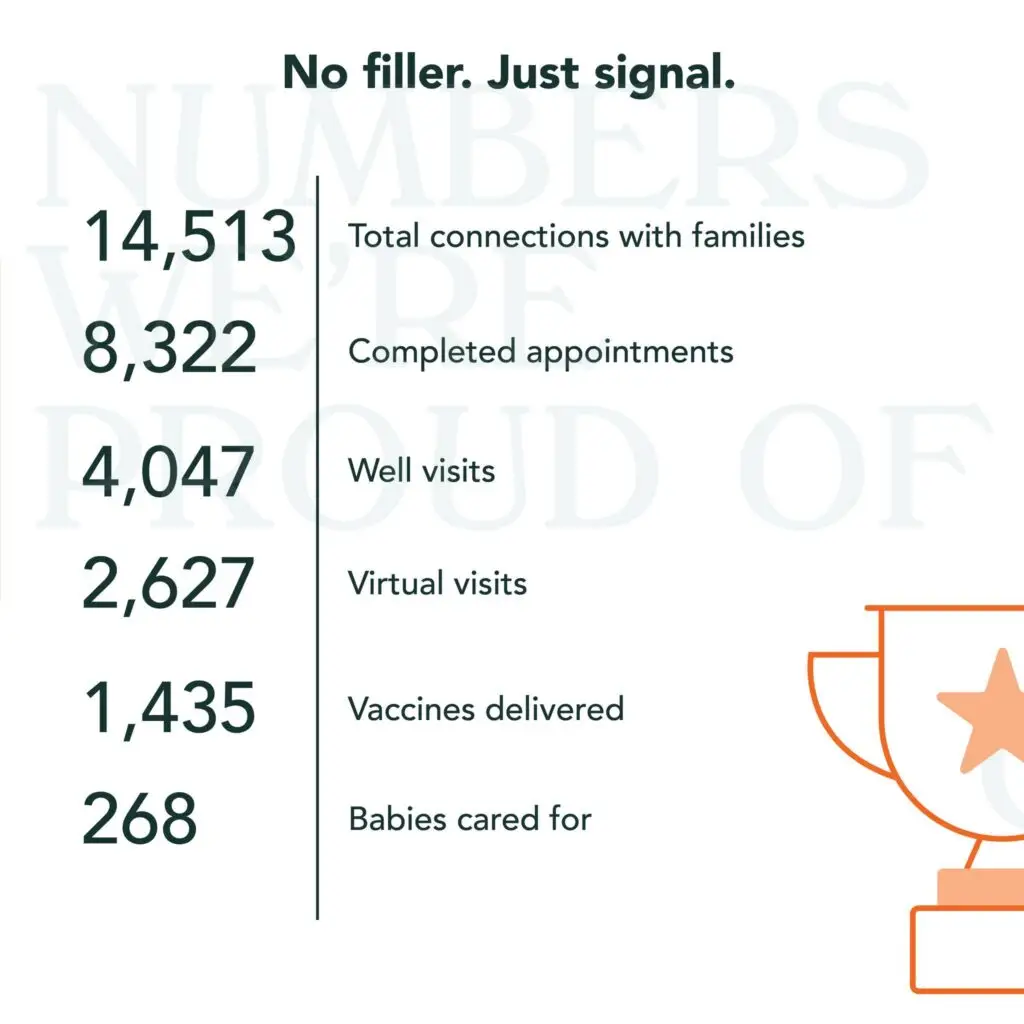
That model is already producing results. In partnership with AmeriHealth Caritas Louisiana, Nest began offering in-home primary care to 7,500 members in the New Orleans area in 2023. In the first year, the collaboration showed a reduction in emergency room visits, childhood vaccination rates that doubled the Louisiana Department of Health target, and completion of 91 percent of postpartum visits within 30 days.
Perhaps most telling, Nest’s teams reach three of every four families for whom the health plan had no working phone number. These are the patients traditional systems had simply lost.
Venture Capital, Force Multiplier
A whole-family, in-home primary care model for Medicaid is exactly the kind of company that traditional healthcare financing struggles to fund. Hospital systems are built around facilities. Grants are built around programs. Neither was built to stand up clinical teams, technology, payer contracts, and operations across multiple states before revenue catches up. That is the gap venture capital aimed to close by investing in Nest.
Nest raised a seed round in 2023, a seed extension in 2024, and a Series A in 2025. That capital helped the company build a model traditional healthcare had missed, standing up care teams, technology, payer partnerships, and operations across markets.
“What the team has built is not only clinically rigorous, but operationally scalable in a Medicaid environment that rarely rewards innovation,” says Carli Sapir of Amboy Street Ventures.
With venture backing, Nest has grown from three employees at founding to roughly 75 today, with teams in Louisiana and Arizona and shared-services staff across eight more states. The clinical hires, including medical assistants, nurse practitioners, physician assistants, midwives, and other providers, are the kind of healthcare jobs that anchor local economies.
Those jobs are not concentrated only in metro New Orleans and Phoenix. Nest is hiring into rural Mohave County, Arizona, where provider shortages and geography have historically made Medicaid coverage feel theoretical. The company’s expansion into Mohave and Lake Havasu City through its partnership with Health Choice Arizona has put care teams into one of the country’s most acute healthcare deserts.
Nest has also expanded its clinical platform. Nest Rooted Recovery supports whole-family substance use disorder recovery and care coordination. Nest Origin is designed to improve prenatal care engagement, pregnancy outcomes, and continuity of care from before birth onward.
Venture funding gave Nest room to grow at a moment when Medicaid policy is pressing managed care organizations to spend more effectively while improving member outcomes.
What Comes Next
As the first value-based care provider built for families, Nest Health is making medical, social, and behavioral care, in the home and online, easily accessible to families on Medicaid.
Nest is a Medicaid innovation story, a women’s and family health story, and a venture capital story that shows how early-stage capital can help a company grow to reach families before preventable health gaps become emergency room visits, missed milestones, and higher costs for the system.
The home is where health is built, and Nest is building the care model around it.
Nest Health is backed by NVCA member firm Blue Venture Fund. This story is part of NVCA’s Startup Stories, an ongoing series on how venture-backed founders drive American jobs, innovation, and economic growth, and on the importance of a thriving entrepreneurial ecosystem.